
Current care delivery models are reaching a critical breaking point. Can AI, Ambient Sensors, and Accelerated Processing support the intricate systems and operations of modern care environments to create healthier more sustainable healthcare systems?
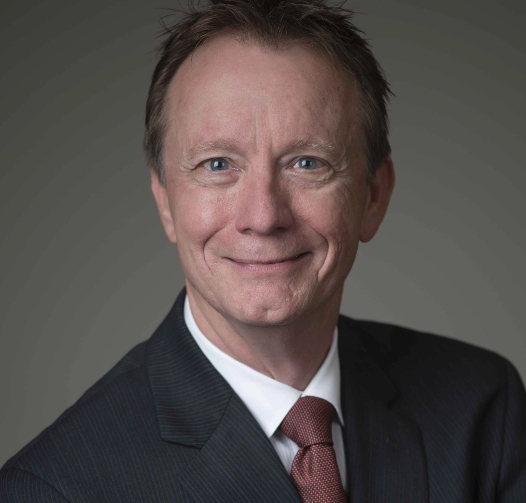
Steve Lieber served as President and CEO of HIMSS, for 18 years, during which time he brought significant growth to the organization and was recognized as one of the Top 100 most influential people in US healthcare. Lieber has been awarded honorary life memberships at HIMSS, the American Hospital Association, and the American Society of Healthcare Risk Management.

"I love all of healthcare life science payers, but my heart is on the provider side and the importance of providers. And I just want the reason I'm so passionate about this is I want everyone to get a hold of the importance of doing these things faster, because if we don't do it, we will be, and we're seeing it be disintermediated by otehr players that don't have necessarily the same heart." - Ed Marx

SFTS_Ed Marx.mp3: this mp3 audio file was automatically transcribed by Sonix with the best speech-to-text algorithms. This transcript may contain errors.
Intro/Outro:
Welcome to Smart From the Start, presented by Care.ai, the smart care facility, platform company, and leader in AI and ambient intelligence for healthcare. Join Steve Lieber, former CEO of HIMS, as he interviews the brightest minds in the health provider space on truly transformative technologies that are modernizing healthcare.
Steve Lieber:
Hello and welcome to Smart From the Start, I'm your host, Steve Lieber, and it is my pleasure to bring to you a series of conversations with some of the sharpest minds in health information technology. We'll discuss the smart directions healthcare companies and providers are pursuing to create smart care teams. Today, I'm joined by long-time friend and colleague Ed Marx. Ed brings to us an incredible depth of clinical, business, and digital experience and expertise. He served in C-suite roles at the Cleveland Clinic, New York City Health and Hospitals, Telsa's, Texas Health Resources, and University Hospitals. He has also been on the supplier side as CEO for the consulting firm Divergent Global, CTO for Tech Mahindra Health and Life Sciences, and CIO of the Advisory board. I believe most of us connect with Ed on probably a weekly basis, through his numerous speaking, writing, and podcasting activities, he's authored healthcare bestsellers included Voices of Innovation and Healthcare Digital Transformation. His podcast, Digital Voices, is top 3% globally. His blog, CEO Unplug, has surpassed 1 million views and Ed recently started a YouTube channel. So Ed, thank you for joining us today.
Ed Marx:
Hey Steve, I'm so excited to be with you. You're one of my heroes in healthcare, so it's a double treat.
Steve Lieber:
Uh, you're way too kind. And we do. We go back more than 20 years into my early days at HIMS, and I think that was when you were probably at University Hospital. I think back at the beginning of where we connected.
Ed Marx:
In fact, my big score was I had just taken over as president of the HIMS chapter in North Ohio. You had just become president of HIMS, and I was like, I wrote to you. I said, please come to our chapter. And you did. And it's like we scored. We had the new HIMS CEO out there before anyone else.
Steve Lieber:
And it really was, it was an opportunity for my introduction. I my background has always been healthcare, but technology was a relatively new area for me. And you did. You started me on my path of education and I thank you for that. So let's start our conversation with what's gone over the last 20 to 25 years or so. And in my mind we've actually seen transformation. We talked transformation at all. And obviously if you look over a long enough period, you'll find transformation. What I want to hear from you today as a starting point, Ed, is what are the bright spots? Where have we? And I'll even use the word succeeded.
Ed Marx:
Yeah, because I can be sort of a naysayer sometimes when it comes to this topic, because I still feel we're a little bit further behind than other industries, and I'm always trying to get us to catch up. But that said, to your point, Steve, we've done a lot of fantastic things even in the last ten years. Just the EHR adoption, right? We've seen it. I just saw the latest numbers from ONC, I think 97% of hospitals now are able to have electronic health records. And that's, I think, ten years ago that was like about 25%. And so we've seen dramatic improvement and even move it to the cloud. It seems funny talking about it because it's just a natural thing now. But for healthcare, we're seeing a lot more movement to the cloud, a lot less reliance on our own data centers and things like that. Virtual care is another sort of bright spot, especially during the pandemic, although I'm a little concerned with how we were going backwards quite a bit on the amount of utilization with virtual care, but definitely bright spots. And then the other thing is, I love seeing the emerging leaders, because that's who I was just 20 years ago when you and I were first meeting up. And so it's interesting to watch as these emerging leaders take hold and make more things happen. Accelerate transformation. That's pretty cool. I guess the last bright spot would be that we're starting to embrace the whole concept of human-centered design, patient-centered design, consumer directed type of things. And so I like seeing that as we explore technologies.
Steve Lieber:
Okay. And so we do have to explore the other side of that coin. You know, there are places where we're disappointed, maybe in terms of where we thought things would be by this point in time. So what are those that you would highlight?
Ed Marx:
So my prediction when I was leading digital and strategy at Cleveland Clinic, my prediction and right before the pandemic this was early 2019, was that we'd be at 50%. All outpatient visits would be virtual and during the pandemic, depending on the organization. But I think the average of averages was about 60 to 70%. So I was like, this is really going to happen, unfortunately, it took a pandemic, but it's really happening, right? It really accelerated the pace of change. But then as we look at the numbers after the pandemic went down, we saw those numbers go below 50%, 40%, 25, 15, 10%, depending again on the organization. And so that was a little disappointing. And I know it's not the technology leaders, the reason why we haven't maintained a higher level. There's a lot of different things that go into that. But that's one thing. The whole concept of hospital inside the home, that was another sort of prediction that we were laying out, was like 25% of inpatient days would be at home. And again, during the pandemic, we saw more of that, and we're starting to see it. But it's just always slow, right? We know that it's that the cost is half. We know the quality is the same. We know the experience of the patient and family is much higher. And so I do see organizations that are pushing this and doing like maybe going halfway, like doing it, setting it up in hotels, which is a good halfway step going into the home. But that's the one area. And finally, Steve, sorry you got me going now because one thing is I'm always concerned for my I love provider side. I love all of healthcare life sciences payers, but my heart is on the provider side and the importance of providers. And I just want the reason I'm so passionate about this is I want everyone to get a hold of the importance of doing these things faster, because if we don't do it, we will be, and we're seeing it be disintermediated by other players that don't have necessarily the same heart. And motivation, and I don't want to go past that because I don't want to hurt people's feelings, but no one cares for your community like the people who live in your community.
Steve Lieber:
Let's try to unpack a little bit about some of those barriers, because I agree with you and I both have been in the business long enough that we probably have gotten to the point now where we're impatient and maybe for a very good reason, because healthcare traditionally is known to be slow to adopt in that sort of thing. And you hear the arguments, well, we're dealing with people's lives, and so we have to be careful and that sort of thing start to see a little bit of the fail fast mentality in some areas and all. But what are you sensing as being some of those major barriers that people are dealing with and, any strategies, on how you overcome those?
Ed Marx:
Yeah. So for sure the obvious one is the payment system. So as much as I'm into a hospital in the home and doing things differently, the payment systems haven't necessarily kept pace. I do see change. The government is doing CMS is doing a lot of innovative programs. It's just not fast enough for me. But they are doing more programs and checking it out. So far it's been there's good success to show from it, so I think we're definitely headed that way. But we're slow to adopt these new payment systems. We're a large country, and we have a lot of different health plans, and we're not a single-payer system where maybe it would work faster. So we have to work with it in that environment. But that's very slow to change. But we are headed in the right direction, the ones. So that's not as much as in our control, although we all have policies and policy wonks and lobbyists that help us out. The second area that I think we do have more capability in is what we can do ourselves in our local communities, in our hospitals, in our health systems, whether it's local or it's a larger health system that spans multiple states. But I think it comes to change management, right? We always hear that people don't like change, and there's various philosophies on that particular statement. But it's true that change is a challenge. And so when you're introducing, hey, this is a new way we're going to do things well, we've always done it this way. We're wired to do it. We have all this process. We've done all these six sigmas, you know. So it's like hard to like pivot and change and it's easier just to go to work every day and just do what you did yesterday. And I think that's a big part of it. So it requires really transformative leaders to come in and say, no, we are going to make this pivot. We are going to change. I serve on the board of Summa Health and I love the CEO. He's super into technology, which is great. And he's created this board now that's very supportive of tech. And so you see some of that I can watch it firsthand where he you're dealing with again, like any other health system, people who've been there for a long time and they're wonderful, lovely people. Nothing against them. They're just used to doing it a certain way. And so you have a transformative leader who builds a leadership team around him, develops the mission and vision, catalyzes everyone to make the change. So it's starting to happen, but that's something you can impact. You can't blame the government on that one. It's like, no, you can do something. So those are like two areas change and the government and payment system that are sort of obstacles, Steve. But at least in both of them I gave you a couple ideas what you can do, but especially in the second one and change management, it comes down to leadership of the organization.
Steve Lieber:
Yeah. And I think you touched on it in terms of changing demographics in leadership roles. You see younger people coming into the industry. And at least from my perspective, I'm sensing a little more urgency, mainly because I think their background is more technologically based than ours was. We had to learn it, yes. While we were at the same time running the organizations and such, they come in with a greater expectation of things being in perhaps a different place than they find when they walk in the door.
Ed Marx:
Yeah, no, that's true. There's a lot of change. A lot of you could look at them as tailwinds or headwinds. I like to look at them as tailwinds to push us along rather than something to fight. And that is right. The whole disintermediation I was foreshadowing earlier in the conversation where you have big tech coming in now and they are challenging, right? Amazon has its own virtual care capabilities, and they're mixing it with also the physical presence. So it's a kind of a hybrid I can go on and on Best Buy right. For a home hospital at home there's like I've been tracking these. I have like a tracker of like 25 different retail tech coming in and disrupting things. And they're doing things the right way that they learn from other parts of different industries. Very consumer-oriented, human-centered design. Hey, you want to have your appointments on the weekends because you're working during the week. Of course, you want them at night. Of course, just these some of these things are so simple. Others are tech-enabled, but it's all real. And they're starting to take off the take off the edges all the high margin type of activities go to ambulatory, ambulatory surgery, any sort of ambulatory care, all that has been siphoned off of these health systems. And pretty soon all they'll be left with is high acuity care. And the problem is who's directing that? So who's directing it? Right? Are the payers who now have the majority of physicians under their control? And so you see these changes. So yeah, I think hospital leaders are finally getting smart to the fact that, okay, I didn't really want to push the change thing. I there's only so much I could do with government. But my gosh, if we want to stay viable, we've got to make dramatic change. We've got to change now. And so I think that is, Steve, to your point, a big catalyst. I like to again, I like to look at it as a tailwind, not necessarily a headwind.
Steve Lieber:
Yeah. You touched on some of those new players, relatively speaking, coming into the market. And again, we've seen that over the past generation or more companies that weren't in healthcare coming to healthcare in the past. They were gone in five years or less. Yeah. Are you seeing a little different pattern this time? Are they smarter? Are they taking the time to understand healthcare before jumping in? But what are you seeing in terms of those what we'll call disruptors, for lack of a better label to put on them right now?
Ed Marx:
Yeah, I think they're learning, and they're massive companies as you know, that are very profitable. So they've got the margin to experiment, to innovate. And we all know the failed examples. They were probably on the HIMS stage, right, talking about the great things, how they're going to change healthcare. And then they never did, but they kept at it and kept learning. And then I think they've done some smart things. They've hired some smart people, right? They hired smart clinicians, former tech leaders from the provider side. I think that helps a lot and gives them a lot more credibility, gives them a lot more insight. And I think tech is getting better, it's getting faste, it's getting more ubiquitous, it's getting more scalable. So I think all those things coming together is going to help make them much more successful than they've been in the past, so I would not brush them off. It's too late anyway, especially when you look at AI. Oops, I said the word AI before you did. What they've done with AI is not something that is going to be easily replicated by a health system trying to do it by themselves, as an example, or a traditional EHR vendor; adding AI don't think that's going to work anymore. I think there is going to be disruption, AI is just one example.
Steve Lieber:
Yeah, well you did, you opened the door, and of course, we couldn't spend 15 minutes here without talking about artificial intelligence and such. So the way I look at it is we spent a long time digitizing information. We needed to get it going far enough back out of paper into an electronic record. Now and for some time we want to use it. And that's what I see, AI driving is the use of that digital data and actually bringing some additional I'll even use the R-word here research into decision-making because it can look across so many things. So what's your outlook on AI short term? Where are we right now? What are the opportunities and risks? And I think long term, we all believe that it has a significant role in the future of healthcare delivery.
Ed Marx:
Yeah, yeah. But hype like blockchain, although I heard blockchain coming back, there was a very prominent speaker I heard not too long ago talking about blockchain. I was like, oh, that's pretty interesting. But yeah, I don't think this is Blockchain 2. Oh, this is going to be much more pervasive. And yeah, in fact, I think Rock Health or someone recently came out and suggested that we were at the top already of the hype cycle, which is a good sign. If that were true, that we're going to come down into the trough of disillusionment reality type stuff, and you actually get stuff done. So there is a lot of hype, and I'd be happy to know or to think that we are, you know, on top of that hype, and there's not much more to go. So we could really concentrate. And then, you know, the final sort of premise I'll give before answering your question is, I think it's much like the time of the Gold Rush. Who was the big winners in the gold rush? It wasn't gold people getting money out of the streams because that ended up, uh, sort of getting a bus if you think about the gold rush in California. But it was like Levi's. Levi's was the big winner, right? Because they these all these workers needed better clothing. And that's how Levi's was born and other industries. And I heard someone use a similar analogy related to like the large language models of refrigeration. Who was the big winner from refrigeration? It was Coca-Cola. It was the services, the products that came after refrigeration. Because now you can have a cold Coke or a cold beer. You could use beer analogy or whatever it might be. If you didn't have the ability for refrigeration, beer might not be as popular as it is today than what not. So I think that groundwork has been laid down as LLM capability, and now it's like, who's going to harvest it? And is it? We could talk all sorts of vendors. I try to avoid specific vendors, but not that they're bad, but I don't want to seem to promote anyone over someone else. But there are some vendors that are doing it now, like they're adding to the LLM very specific language models for healthcare. So it's all the big ones that are obvious Amazon, Google, Microsoft, they're all adding to that and then creating these products that may become the new Coke or the new beer of some sort, Budweiser or whatever. And so I think it's to come, but really good early successes so far that we've been doing for a while in imaging, especially with pathology lab radiology, been doing it for a while. I've been doing I can say I've been doing AI because I helped implement these systems for the last ten years, and they're quite remarkable and have done a lot to help with clinician burnout, help improve quality, help improve productivity, reduce cost. I mean, it's great stuff. And then obviously the ambient voice now is kind of the latest rage with the AI capabilities that we're seeing there and then the ability to write notes, right? There were some studies done that we're all familiar with where physicians are encumbered with so many inbox messages. And so now AI has ability to write them even better than a physician could have. Summaries of all the data, right? You get so much data as a clinician, you know, they're not looking at all the data. There's no way they could. And it's all summer. It can be all summarized for them. So those are some early indications, I think the future. and we were envisioning this again when I was at the Cleveland Clinic day, where when you're having that ambient experience with your clinician looking at them, eye and eye, they might have an earpiece that is giving them more information based on what they're hearing in real-time and looking at your DNA and other test results and other studies that have been done on patients like you all in real-time, so they know the next best question to ask, so that that encounter will be so much more productive. Because we all know it's a big guess. That's why it's the Art of medicine, not the science. And this will help make it even more science-based and really be a great help to clinicians and give them a lot more confidence and give you as a patient a lot more confidence, because we all know stories where things didn't go well and it came to really negative outcomes because people didn't have all the information they needed. So I think that's one of the really cool places that we're headed. But all of these around hat leveraging it to improve the overall experience of the customer. Like, do you know me? Like they don't really know, they still don't know me. I still Steve, I don't know if you have the same experience, but despite the fact I won't name the health systems because I was part of those health systems. But that's where I go to today for my healthcare, and I still get a clipboard at the end, and it just kills me. Even though everything is automated and we made so many investments, it just always disheartens me. I'm always like giving a sad face whenever that happens, but I think we're going to start to know the patient a lot better. We're going to get a lot of different inputs about the patient, so we don't have to ask all the same redundant questions all the time. So the patient experience is going to get much better. And then obviously the clinician we already gave some examples, but it's going to make the clinician world much much better. So reduce burnout again improve quality patient safety. It's just limitless really what can happen. And again I have high confidence this time because of the tech is there. In the past the tech wasn't there. We weren't fast enough, it wasn't enterprise, it wasn't scale. But now it's there and it's getting better, it's self-learning. So I'm a big believer in really excited.
Steve Lieber:
That's great to hear. Ed and I do I share that view as well. I think in some respects we can say, okay, we laid a pretty good foundation over the past number of years, and now this stuff coming in on top of that foundation really has some great opportunities. And you're reinforcing what I'm hearing in these podcasts that there is a great deal of optimism, recognizing that there is a learning cycle. You have to do that with the new employee. It's no different people versus machines and that sort of thing. There is a learning cycle and a learning curve that goes on here. So let's just wrap up because you've really touched on so many things. I really could spend the whole afternoon talking with you, but I know you've got other things you need to head to. But just to close this out here, our listeners are people like you, they are CIOs, CMIO's, they're industry supplier people, others. What we're looking for as a closer on these podcasts is a takeaway. Ed Marx's takeaway for those folks that are facing these challenges and these opportunities on a daily basis.
Ed Marx:
Yeah, I'll give you two. So when you were speaking to sort of jump to mind. One is take risks, I think one of the reasons, Steve, we're behind and we talked about culture, we talked about payment systems and stuff like that. But the other thing is leaders are afraid to take risks. And we probably got to where we were like, maybe made the move to manager director, maybe even to VP because we took risks and people noticed are like, dang and Steve, he's pretty sharp, I mean, look, that decision he made and it was probably an outlier decision, other people were afraid to make it and they're still directors. And I know that was certainly happened to me. I was the one who was taken making smart base risk decisions that paid off most of the time and got promoted. But we get to a certain place where then we get scared or like, oh, I don't want to lose my CIO position, I don't want to stop being CEO or whatever it is, and we become risk averse because you ever scratch your head, like, how did that person become CEO or CIO? And you scratch your head because what are they doing? Were they at one time they were this vibrant leader taking calculated risk, and then they stopped because they got scared of losing their job. So I think one thing is don't worry about losing your job, man. If you're doing the right thing, things will work out. So take risk. The second thing, and maybe the most important one, is always never forget to connect the head to the heart. We're in this, I think we got into this somewhere along the way because we knew we were doing good. We were doing good for people. We were helping people. Even on our worst day, I remember coming home, we always do the happy sad at the dinner table, like, what's the one best thing that happened to you today? What's the one saddest thing? Because then you want to celebrate the happiness. And if anything's sad, you want to support the person. So it's like even on the saddest day, even on the worst workday, I knew that my team had been part of saving someone's life, that they helped improve the quality of life for someone, that they helped improve the quality for a clinician made their life easier. So it's like we can never forget that our mission when we serve in tech or digital, in healthcare, ultimately, is to help save lives, improve quality care, the whole mission-driven aspect. And when we get into the minutia and then in the little fights and fiefdoms that occur within silos and we get aggravated, don't ever lose sight that at the end of all this is a patient and a family. So that's my final takeaway.
Steve Lieber:
Those are great. And you hit on two very important pieces, both the intellectual side and the emotional side. And that is what we're all made up of is at least those two components. So Ed, this has been a fantastic conversation. It is such a treat to to connect with you today and have this time that, that we were able to spend together.
Ed Marx:
Yeah, likewise. Thank you for having me, Steve. Again, you're one of my heroes and I couldn't resist the opportunity to spend this time with you.
Steve Lieber:
Thank you, I appreciate that. And to our listeners, thank you for joining us. I hope this series helps you make health care smarter and move at the speed of tech. Be well.
Intro/Outro:
Thanks for listening to Smart From the Start, for best practices in AI and ambient intelligence, and ways your organization can help lead the era of smart hospitals. Visit us at smarthospital.ai. And for information on the leading smart care facility platform, visit care.ai.
Sonix has many features that you'd love including upload many different filetypes, advanced search, automated subtitles, enterprise-grade admin tools, and easily transcribe your Zoom meetings. Try Sonix for free today.



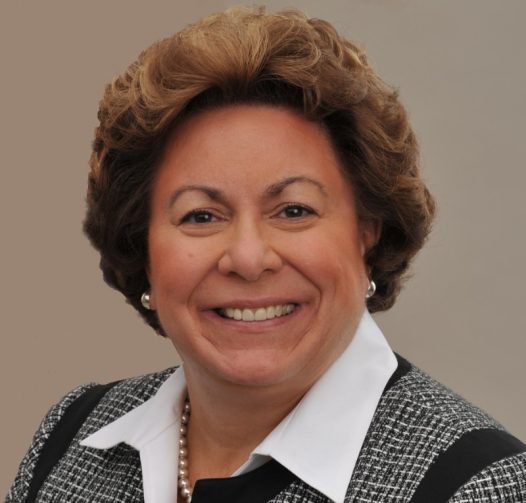
"One of the beauties of predictive analytics using AI is that you don't start with the hypothesis. You're looking for the similarities; you're looking for the trends. And so maybe some of the things that really make a difference aren't things we've looked for, they're not things we've hypothesized. And so in my mind, that's what's really going to help us advance evidence-based practice." - Judy Murphy
SCTS_Judy Murphy_Steve intro.mp3: this mp3 audio file was automatically transcribed by Sonix with the best speech-to-text algorithms. This transcript may contain errors.
Judy Murphy:
Hello and welcome to this Special Holiday Edition of Smart From the Start, I'm Steve Lieber and I hope you're enjoying this holiday season. Today, we are treating you to another special crossover event, once again featuring Molly McCarthy, the former chief nursing officer at Microsoft, and her podcast, The Smart Care Team Spotlight, also presented by care.ai. Molly engages in thought-provoking discussions with trailblazers and the most innovative nursing leaders in healthcare. Today, we are sharing another one of her captivating conversations, this time featuring a long-time friend and colleague of mine, Judy Murphy. Judy is a clinical informatics pioneer and formerly served as CNO of IBM HealthCare, as well as senior nursing informatics roles in provider settings. Judy discusses the challenges faced during the infancy of clinical IT applications, lessons learned from implementing EMRs, and the critical role of data retrieval alongside data entry exploring the highs and lows of AI implementation. Judy sheds light on issues like data curation and trust establishment. She also delves into the hype around ChatGPT AI and broader AI integration in health care, making it a perfect complementary fit for our Smart From the Dtart community. So, kick back, unwind, and enjoy this special episode. Let's learn how to navigate the dynamic intersection of AI and health care for meaningful patient care and outcome improvements. With Judy Murphy on the Smart Care Team Spotlight, I wish you all a festive and joy-filled holiday season. Enjoy the show!
Intro/Outro:
Welcome to the Smart Care Team Spotlight presented by care.ai, the smart care facility, platform company and leader in AI and ambient intelligence for health care. Join Molly McCarthy, former CNO of Microsoft, as she interviews the brightest minds in healthcare about the transformational promise of AI and ambient intelligence for care teams.
Molly McCarthy:
Too often, technology makes caregivers' lives harder, not easier. It's time for smart technology to empower care with a more human touch. Today, I'm honored to have a clinical informatics pioneer and trailblazer, Judy Murphy, as our guest on the Smart Care Team podcast as it relates to the intersection of nursing, informatics, and government policy. Few others can match the career of Judy Murphy. After starting as a bedside nurse and nurse manager, Judy had a long career introducing and deploying an array of clinical IT solutions at Aurora Health in Wisconsin, ahead of notable roles as the CNO with HHS Office of the National Coordinator for Health IT, which is where, Judy, I believe we first met, and the CNO of IBM healthcare. So we're excited to have a conversation that will draw upon the wealth of these experience from the past and her wisdom to inform our future. Welcome, Judy. Thank you so much for joining us today.
Judy Murphy:
Thanks, Molly.
Molly McCarthy:
I'm going to go ahead and dive right in. I know our listeners are eager to hear from your vast array of experiences and really want to start out with your time at Aurora, which is now, I believe, Advocate Healthcare. You saw and really oversaw the infancy of clinical IT applications through, I would say, the awkward teenage years of Health IT with enterprise deployments of the EMR. I know that you have extensive experience with that. And as you think about retrospectively, that journey and the evolution of health IT to where we are today. What can you tell our listeners about what you think we got? You got right or we got right, as well as areas for improvement or what we could have done better?
Speaker4:
Yeah, that's a really good question, Molly. And I would say I started in the infant years, not just the teenage years, because I started doing this in the 80s. And that's important only because I think it it hits on the first point that I'd like to make, and that is what was learned was the form factor itself that's used for the automation makes a huge difference. Meaning, you know, in the 80s, in the 90s, you know, we didn't have small devices, we didn't have flat screens, we didn't have good Wi-Fi. And that all played into the I'll call it the stubbornness, if you will, of the technology to actually support us as clinicians in a way that that we needed. And so when a lot of that changed, and we had mobile devices, and we had flat screens, and we had good Wi-Fi, that made made a huge difference. So one of the points I want to make is the importance of actually supporting the work well and the devices themselves moving with the clinician, particularly the nurse, and not just kind of being that fixed device. I have to say, one of the funny retrospective story, we tried to automate the recovery room documentation, and there was no Wi-Fi, and the devices were big. So we had this big device cart, and we had cords coming out of the ceiling, and you could literally move the device like five feet this way and five feet that way because they were tethered to the ceiling.
Judy Murphy:
Suffice it to say, something like that really didn't work. I want to say it was better than nothing. But like, again, you found yourself working around the devices compared to the device actually supporting the way you were working. So really important point. You know, I think the second one is we worry a lot about data entry and the timing of data entry, but I want to also emphasize the importance of data retrieval, and that technology should be supporting that data retrieval. And we haven't always done that in all the different screens and flow sheets and things that we've put into our automated documentation and even the pulling out of lab results, things, things like highlighting abnormals in a really good way and making it simple to know what lab results are, what documentation results I saw before through the use of bookmarks when bringing me in, where I last was looking, some of the stuff that we consider just automatic today, some of our web searches and stuff not and aren't necessarily in all of our electronic health records. So those are two lessons I think I'll just kind of throw out there.
Molly McCarthy:
Great. Well thank you. I think those are really important points, especially meeting that clinician where they're at in terms of having a device that goes along with the clinician rather than tethered to a specific point, and then the data entry obviously huge and retrieval. That's a great point. And really in today's world, presenting that information back to the clinician in a easily digestible manner. And so, just as a follow-up question to that, I would love to hear how that experience really led to some of your other positions, most notably ONC.
Speaker4:
So a petabyte identified the struggles that we had in those early days, and everybody was struggling. So one of the important things to do would be to share our struggles. So we weren't all learning the same lessons. So fairly early on I got involved in our organizations. Both Amia and HIMS were professional journals for me in terms of working with clinicians and working with IT, folks that, you know, were in this industry and were moving along with me. And so hearing from other people and hearing about their experiences with things was a really important point, and making sure that we were constantly sharing in our committee work, in our presentations, in our writings. And we had both local groups and we had national groups. And that really led to me meeting people from around the country who were doing this. And I fairly early realized how literally important that was, not just for the sharing purpose, but to drive the industry. And so getting involved in, you know, boards of directors and committee chairs, those kinds of things. That also led to my appointment as the national, one of the national representatives for the standards committee that ONC formed in those early days when the money started to flow related to meaningful use and helping set that criteria and things. And so I would always recommend to everybody, if you could look outside your own little world and, you know, have time to spend not just on your. Own job, but on sharing and networking, how important that really is going to be, not just for your career, but for your learning.
Molly McCarthy:
Now, I love that. I think I always like to say, don't reinvent the wheel. How can we share both our pitfalls as well as successes with regards to technology? And going back to that point you made earlier about supporting workflows? I think especially sharing, you know, what we're doing today and how we're really improving and evolving the nursing profession. I would love to circle back to ONC in just a minute, but I first want to talk a little bit about your time at IBM Healthcare, which received a lot of early attention around Watson AI and machine learning capabilities, which ultimately did not necessarily make the expected transformation impact transformational impact within the industry. And so, as you reflect back on that experience at IBM, would love to hear what your thoughts around AI and healthcare and what IBM Watson got right, and perhaps what they should have done differently.
Speaker4:
So there's been a lot of speculation about this, of course, and I would not be the one to be the expert on it. But if I look at what I know and understood about Watson, the use cases that were identified were good. They were very logical use cases, clinical trials, matching, oncology, genomics, personalized medicine, those were all really good use cases, I think, where there were struggles. First of all, we know it was early and there wasn't as much, I'll call it freight, but also understanding about AI. And so people sort of thought it was like magic, you know, like the computer could figure out things that an individual person couldn't figure out, which is true. But of course, the computer could only know what it's been told to know through its learning. Right? And so I think we, IBM Watson, were surprised about the, um, curation that was actually required of the data that was pulled to go into the algorithms to understand the problems that Watson was trying to solve. And when you think about things like radiology, you know, identifying tumors in the lungs or identified tumors in the breasts, it wasn't there aren't databases that have that kind of information in and out. And so it was literally training, you know, like Watson could say, is this a tour? And somebody would have to say, yes, in fact it is. No, this is not yes. This is because there weren't the large language models to actually pull from for those decision-making properties. So I think not having all of that knowledge and then the load, if you will, on clinicians for the curation of the data to make sure that it was making solid decisions, particularly in the beginning, was one of the issues. Um, and then there was the whole trust thing, like I said, it was early, and so folks weren't necessarily bought into this concept that they were going to believe what was actually, you know, being said for the decisions that were coming back.
Molly McCarthy:
Yeah. So trust I think within healthcare obviously is so important, such a key component. And perhaps it was just before its prime, so to speak. And speaking of which, in terms of hype and magic, we've heard a ton this year around ChatGPT, AI, generative AI, and I think every vendor and startup is now suddenly making claims around AI and health. And really, I think as a health system leader, how do you separate kind of the hype and the noise from the truth?
Speaker4:
So I think we have to first of all learn. We have to understand what AI can do and what it can't do, and understanding how it works, and what data was actually used to make the decisions that is coming forward and giving it to you. And a lot of the tools that I've been hearing about being developed, you can, you know, I'll call it click a button, but it could be some other way of getting to it, but that once you get something back, um, from an AI tool, that you will always have the capability of clicking something to see what knowledge was used to make that particular decision. Um, I will say we have been in the healthcare industry very, very, very EHR-centric. And because of that and because of what we talked about minutes ago related to the workflow of clinicians, it is not going to be simple to use a tool that is not on the EHR because you have to break your workflow, turn to something else, or click on something else, or go to another app and use that. And so in the context of providing patient care, I think the implementation of something like ChatGPT is going to be difficult. Now that being said, if I'm looking for information to help make a diagnosis on something rare that I don't understand, or if I'm looking for predictive analytics, these now would be really good ways of using those kinds of tools outside of the actual delivery of patient care. You know, when I've got the time to do those kinds of things, and I see that's going to be so in my mind, sort of the early things we will use it for.
Molly McCarthy:
Yeah. I think you're 100% right in terms of EHR centric. I've spoken to people who have mentioned, and I'm sure you have too, that if it doesn't integrate with the EHR, then it's a no-go just because the amount invested. So I think that's a really important point. And the other point is going back to talking about the workflows. You don't want to interrupt a well-established and well-documented workflow. So I think that's a really important point. And one thing as we think about the emerging use cases, you started to talk a little bit about that, but where do you think AI can make the biggest impact for care delivery and for patients? And then any thoughts around how we can utilize it to make the life within the hospital for nurses and other caregivers easier? So it's not encumbered covering them.
Speaker4:
So in my mind, the one of the best use cases is helping us evolve evidence-based practice and helping us really understand as nurses, what are the things that we do that make a difference to the patient's outcomes, and what are the things we do that we just always sort of done and could possibly, could possibly drop? And so with the electronic health record being implemented now for many years, we've got data that we didn't have 20 years ago or even 10 years ago—and so looking at using AI to forage back, if you will, into the care that we provided and helping us understand what things really, really do make a difference to patient care, both in the inpatient setting and the outpatient setting, and how does it change outcomes? You know, one of the things that when you think about traditional research, we have to hypothesize and then we test that hypothesis. Right. And one of the beauties of predictive analytics using AI is that you don't start with the hypothesis. You're looking for the similarities, you're looking for the trends. And so maybe some of the things that really make a difference aren't things we've looked for.
Judy Murphy:
They're not things we've hypothesized. And so in in my mind that's what's really going to help us advance evidence-based practice. Uh, the second area is in telehealth and home monitoring. If we want to do something like home monitoring, broad scale, we're going to have to have a way of collecting information and then sifting through it and knowing which patients to have real in-person touchpoints with. Right. And I can help with that. Or I can look at the trends of activity or the trends of intake and output, or the trends of blood pressure, the trends of just about anything. And if something gets outside that individual patient's norm, you know, alerting the nurse so she knows that's somebody that she has to call or has to visit, kind of a touch point. So that's the true expansion, if you will, and the capabilities of value-based care and population health management, where, you know, on a broad scale. Now we're looking at lots of patients, and AI can help. Must know which ones need that touch point today. Which one see them tomorrow? Which ones can wait? That type of thing.
Molly McCarthy:
Great. So one I heard from you was just evolving evidence-based practice. And I think the second one, I've spent a lot of time in this area just thinking about home monitoring and being more efficient in how we care for our patients across the care continuum. So those are two great points. And you mentioned the word sift through the data. And I think that's critical that as we have you mentioned we have years and years of data. Are we using it to improve care? We need to delve back through it with AI and then quite frankly, present it in a manner which is digestible by our clinicians. I want to move on, and I want to talk a little bit more about your time at ONC. And as we think about what we learned from our EMR experiences regarding government involvement, how do you think about the needs for oversight, standards, and regulation today related to how we're applying AI in healthcare? I know there's been a lot of talk about that. I'm involved with some work around that as well. So that's my first question. So I'll let you answer that.
Judy Murphy:
Sometimes we need government prodding. I'll call it to get things right. And you know, I think back on the stimulus package where we had the meaningful use program. And the one thing that sticks in my head that I always wonder about is patient portals. What patient portals naturally have evolved if they weren't mandated in the meaningful use two criteria? So curious question. My guess is eventually, but I think it would have taken a lot longer. And I say that because the initial criteria was you had to have a portal and one patient had to use it. I mean, it was like a nothing criteria. And we sit here today and we know just about everybody uses the portal. And the percentages in general are quite high to look at your lab results. You look at x-ray results to see your physician's notes, to see your after-visit summaries, all those kinds of things. And so that's a stimulus where there was involvement and it probably was needed. You know, another really good example is standards. I don't think our vocabulary, standeards I don't think our transmission standards for interoperability would have moved along. The governance would constantly been prodding it and everybody watching what's going to go in the USCDI next, you know, kind of thing. And I feel like that kind of and I keep calling it prodding because they don't do everything, but they do little pieces that kind of spur the industry to start thinking about some things that they should be doing. That being said, I do not think everything should be regulated just like today. It's not, uh, you know, regulated through the government. I mean, maybe some of the ways we're going to get the kind of standardization and evidence-based practice that we need are going to be our other regulatory bodies like Joint Commission or like Pressione, you know, kinds of things where a standard is developed through consensus if you will, and wanting to be able to get certified as compared to the government actually mandating it.
Molly McCarthy:
Those are great points. I love your comment about spurring or, you know, using the government to boost and really push along some of the different models over time. Patient portals, for example. It's a great comment. So without slowing innovation, how can we ensure AI-based solutions launched in market actually really improve quality, safety, equity, and clinical outcomes while lowering costs at the same time that quintuple aim? The other piece that I'm going to add in there is not just clinical outcomes, but also improve. As we talked about earlier, the lives of our clinicians.
Judy Murphy:
Before we launch these applications. I don't think we can ensure anything. I'd love to be able to say that, oh yeah, they have to be perfect before anybody uses them. And that's just not going to be the case. So I think there is going to be some need if you will, that as these kinds of products are launched and used, that there's people monitoring and watching and testing and validating that. In fact, the tools are giving the kinds of answers and solutions that are in fact appropriate. This is going to be an evolving thing for a really long time. And I hate to say we're going to learn as we go, but I do think that's what it's going to be. We're going to learn as we go. When we think back on our EHR journeys, we got some things right, we got some things wrong. And so we stand here today and we're fixing the things that we didn't get right and we're getting things better. Are they going to be perfect? We don't know until we try them, right? Because we don't have a good lab where we can test these kinds of solutions until they're out in practical use. And we're getting feedback from clinicians who are doing practical things with patients every day. Now, again, we have to have some guide rules, right? We can't just go blanket and say everybody can do everything. And so maybe that's where the regulatory agencies and or maybe even the government is going to come into play where we create just some, I think of it as the bumpers on the side of a bowling alley lane. Right. You know, where you can't go in the gutter. It might not be a strike, right? But you've got to prevent people from going into the gutters and there are probably some. Overall big rules that are going to be required related to things like ethics and safety that will be required. But otherwise I think we're going to learn as we go.
Molly McCarthy:
So great points. And I think that the second point you made that I really want to hone in on is feedback from clinicians. That's critical at all points in that development process. So I just have one closing question for you. So most of our listeners, health system CNOs, CNIOs, and their teams, and obviously you've got a really unique lens, having walked many miles in different shoes from bedside nurse to CNO of IBM healthcare. And I really want you to leave our listeners today with some important practical piece of advice right now with keeping in mind the healthcare market and arena.
Judy Murphy:
That's an excellent one that I have thought about many times over my career and written some articles on. In fact, the title of one was 'The Best It Project is not an IT Project', and I hone in on that because technology advances, and then we see its advancement and we figure out how to apply it to our work. And that's backward. In reality, we should be identifying the practice change that we want to implement. So we should be visualizing how we want care to work, and then looking for tools that are going to change toward that direction that we've identified. That doesn't always work, right? Because I'd love to say we consider how we want to change practice, and then we go to a vendor and say, we need you to build X, Y, and Z. That just isn't how the industry works and never has been. But as close as we can get to that and to take these sorts of implementations, especially when we start talking about AI and nursing and thinking about how the practice is going to change and how we're going to make our use that practice change to make a difference in patient care and patient outcomes has to be front and center as compared to the trials and tribulations of the actual implementation. You know, the implementation is so hard. We get so involved in math that we don't think about that practice change and how it's actually changing the way we work and changing the way we deliver patient care. And so keeping that change front and center and letting some of that other stuff kind of become peripheral is probably the advice I give very practically to all those folks who are looking at doing implementations in the next five years.
Molly McCarthy:
Well, thank you, Judy, and listeners, you heard it from her right here. The best IT project is not an IT project. I love that. And to your point about really identifying what needs to change within the nursing practice or the clinical practice to improve patient outcomes is critical. So thank you so much for being with us today, Judy. Appreciate your time.
Intro/Outro:
Thanks for listening to the Smart Care Team Spotlight for best practices in AI and Ambient Intelligence, and ways your organization can help lead the era of smart care teams. Visit us at virtualnursing.com. And for information on the leading smart care facility platform, visit care.ai.
Sonix has many features that you'd love including world-class support, transcribe multiple languages, secure transcription and file storage, enterprise-grade admin tools, and easily transcribe your Zoom meetings. Try Sonix for free today.

"Artificial intelligence is not going to replace clinicians. But the clinician who leverages artificial intelligence is going to be much better positioned than the clinician who does not leverage artificial intelligence. I think that's a very true statement." - Dr. Rob Bart
SFTS_Rob Bart.mp3: this mp3 audio file was automatically transcribed by Sonix with the best speech-to-text algorithms. This transcript may contain errors.
Intro/Outro:
Welcome to Smart From the Start, presented by Care.ai, the smart care facility, platform company, and leader in AI and ambient intelligence for health care. Join Steve Lieber, former CEO of HIMS, as he interviews the brightest minds in the health provider space on truly transformative technologies that are modernizing healthcare.
Steve Lieber:
Hello, and welcome to Smart From the Start, I'm your host, Steve Lieber, and it's my pleasure to bring to you a series of conversations with some of the sharpest minds in health information technology. On these broadcasts, we discussed the smart directions healthcare companies and providers are pursuing to create smart care facilities and teams. Today, I'm joined by Doctor Rob Bart. Doctor Bart received his medical degree from the University of Hawaii, followed by training at Duke in pediatrics and critical care medicine. Doctor Bart formally started working in Health IT in 2000, while on the faculty at USC and Children's Hospital Los Angeles. In 2007, Doctor Bart moved on to a role as CMO at Cerner Corporation. In 2012, he was the first CMIO for the Los Angeles County Department of Health Services, and in the summer of 2017, Doctor Bart moved to Pittsburgh to become the CMIO of UPMC as CMIO at UPMC, Doctor Bart has taken on clinical leadership of all clinical applications. Welcome to the podcast, Rob.
Dr. Rob Bart:
Ah, thanks for having me, Steve. It's nice to be here, and I'm looking forward to a good conversation. As you mentioned, I've been here at UPMC just over six years. It's been incredible learning operational and work experience.
Steve Lieber:
Well, I expect that we'll cover something of a trajectory that you went through pre-pandemic, pandemic, and post-pandemic. And so being in one place during those three somewhat different time periods is going to give us some perspectives that I know that will explore. Where I want to start out is sort of the unique position that UPMC is in, that you folks are very focused on risk-based care in terms of what's going on, your background as pediatric critical care physician, and you've been a clinical informaticist for a long time. You're at the intersection of clinical practice and IT, and so there are several directions there, including your time at Cerner, that's going to give us some perspective. So given your lens in both, uh, health providers and solutions a little bit state of the union, let's say around digital health, let's start out with what are the bright spots that we're seeing right now around digital health.
Dr. Rob Bart:
I'll get to that in a moment, Steve. I think it captured a bit of my history. It'd be remiss to not state that. I do believe I am a better and more well-rounded CMIO because of my experience working at Cerner. I think one of the things of working at a publicly traded company for a number of years is it really forces you to learn how to bring value to your job and what you do at work on a daily basis. And that's something that I think I didn't get as exposed to when I was a more traditional academic physician. And as I moved it more and more into the realm of Healthcare IT and the exposure at Cerner, understanding that and then bringing that back again on the CMIO side, both at LA County and then here at UPMC, it really sort of drives home that necessity of bringing value. I think the other thing it helped me do is understand how to evaluate technologies, how to evaluate companies, how to talk to companies, and sometimes even negotiate with them about their solutions, and really sometimes teaching them how to think about their solution and what it might solve.
Dr. Rob Bart:
To your point now moving it towards to today, things have been especially coming out of the pandemic. As you mentioned, the amount of investment in healthcare IT has been pretty remarkable. And so there's a lot of opportunity out there for technology to be reviewed, thought about, potentially contracted with, and brought into a healthcare system. In fact, the amount that's out there is somewhat overwhelming. And certainly, you're well aware of the financial constraints that healthcare delivery systems are under as we've emerged from the pandemic. And that really means that your evaluation and your understanding of the problems that a solution can solve, as well as the potential return on investment that it has, has to be very clear in today's world, when I talk with our financial officers or our CFOs, they're very interested in technologies that will help us be more efficient or more effective, technologies that will allow us to engage with consumers and patients more effectively. But they want something that will return an ROI in that initial 12 months. They're not interested in two, three, five years down the road, which is...
Steve Lieber:
No more of that three year. Okay. You've got time to to ramp it up. And payback can start in three. They're looking for one, interesting.
Dr. Rob Bart:
That is quite stark. And you know to your comments about the pandemic pre-pandemic most times when we're talking about engaging with a new vendor, on a technology or platform. You were given two, three, 4, or 5 years to ramp up and show that ROI, and you could show the financial math on where you would break even and where you'd get that return. Now that window is really compressed. It's a combination of, I think, the financial circumstance and states that healthcare delivery systems across the US are in, as well as the expectations of how fast we could accomplish tasks and sort of turn on a dime that we learned through the pandemic itself. A lot of healthcare systems, including UPMC, ramped up telemedicine from essentially far less than 1% of visits to up to 1,820% of visits, ramped up a number of asynchronous digital technologies. We were able to do it quickly and effectively, and so we partly created that expectation with the people and operations, and finances. But also I think it was the consumer and patient who also generated that expectation that we were trying to meet. As far as specific technologies that UPMC has been looking at that we're interested in. Certainly you can't go anywhere without discussing ambient voice, and that's something we're very high on, very interested in, and also looking at ways to ease the digital interaction with patients. You know, one of the things that you and I think the audience is well aware of is that healthcare, like many industry verticals, has had staffing challenges coming out of the pandemic.
Dr. Rob Bart:
Some of the staffing challenges there, not just the RNs, but many of them are the operational support staff, like those that might be in a central phone center. And so the more of the interaction that we can move into a digitally mediated as opposed to a human mediated, it both simplifies the process, it allows the consumer to control it and interact in a more efficient manner, but it also decreases the human operational burden that the organization has to solve. So those are areas where we're extremely interested. An additional one would be those solutions that allow us to be more efficient or effective with what we do within our healthcare system. There's a number of solutions out there that work in trying to improve perioperative efficiency, though many of them have AI algorithms because the math is so complex, and how to improve block utilization in an OR or how can we push more patients through a limited capacity system? Similarly, in the ambulatory environment, we're looking at the same thing. How do we make our clinics more efficient? Is really adding to more examination rooms going to be more efficient for that clinic and allow better throughput? Or is the limitation the personnel that we have, and we have to figure out how to utilize our personnel better. And those, again, are somewhat complex math problems that really AI algorithms can help us resolve and improve the efficiency and effectiveness of UPMC's care delivery.
Steve Lieber:
I'm going to piece a couple of things together here, talking about the CFOs and their need for ROI analysis. And then as you've talked about some specific things here, you've talked about efficiency, you've talked about staffing and other multiple metrics. And so what I'm sensing is in looking at adoption of new technology or evaluating what you've done, you need to be looking at it on Multidimensions. Is that what I'm hearing in terms of that kind of analysis?
Dr. Rob Bart:
You're absolutely right, Steve. You have to do a multidimensional analysis. The other piece is you have to have clarity of thought of the problem you're trying to solve. As I think back when I was interviewing for this position, one of the questions that I think kept coming back is I kept talking about the problem that you're trying to solve, the people that perform the task, and what is the workflow in the process there. And I think the fact that I juxtapose and positions those ahead of the actual technology is a lot of what generated the interest in me ultimately being here at UPMC, and that's still a focus of how I think about its problem. People, process, platform, then performance is where I think about it. But a lot of times when someone brings a shiny object to me, and we've got a lot of wonderful, innovative clinicians here at UPMC and innovative folks in operations, and they pay attention to the technologies around them, whether it's colleagues or other healthcare systems or at conferences. And they bring back good ideas, but when you ask them, what are you trying to solve with this technology? Until we get to clarity of that focus, we don't start marching down the road of looking at a shiny object without having that discrete understanding.
Steve Lieber:
So take us through a little bit of the thought process, or even maybe the decision making process of how do you about which one there are, as you've indicated, a lot of shiny objects here. And so where is it that you go or are you looking at? And, you know, it's probably all the above patient experience, clinical experience, clinical outcomes, business efficiency, how do you decide?
Dr. Rob Bart:
It is a challenge. But to that multidimensional analysis, it's almost sort of a balanced scorecard approach of whether you're achieving in the patient experience, what do you have achieving in operational efficiency relative to the investments of the finances, and the outcomes you expect. But there are other factors related to the technology itself that we look at. One example, without naming the company, we were a relatively early adopter in radiology imaging using FDA-approved imaging algorithm for the identification of strokes. And it's something, as you know, the identification of a stroke and how the brain functions or how the brain doesn't function when it's not getting enough oxygen, minutes and seconds matter. It's one of those areas where the sooner the better for the patient and the outcome. And there were a few companies in that space. One of the things that drove us towards the entity that we ended up choosing was they weren't just looking at being an endpoint solution, they were trying to look at how that algorithm could be an entree into an imaging platform that could support a number of AI algorithms, and to me, someone who has to work with the hard-working IT people who have to integrate thing solutions, a bunch of endpoint solutions is a lot of back end work. But if I have an algorithm that's now going to be driven off of an extensible platform and allow other algorithms to be on there in the imaging space, that simplifies my job.
Dr. Rob Bart:
It simplifies the amount of maintenance and work effort that we have to do, and ultimately it becomes something that we want to integrate into our ecosystem at a platform level. So one of the things that we look at is when you're really, really at the leading edge of being an early adopter, you are frequently forced into single endpoint solutions. If you can do a little bit of homework in advance and hopefully figure out the philosophy of how that company you're working with thinks they might be the one. Sometimes you're going to guess wrong. They're not going to be the one that survives or the one that makes the right platform. But sometimes, waiting a little bit and seeing how those companies develop over the first few months, a year, we'll give you an inkling as to which one's going to be the better survivor, which one is going to actually be more thoughtful about developing a platform or an ecosystem approach? And all of those things translate into the opportunity to have a better investment, both operationally and financially, and a better operational financial investment in the long term means that there might be more money available in the future for other healthcare short-term IT decisions.
Steve Lieber:
And these conversations, as well as some other work I'm doing, this focus towards platforms versus single point solutions comes up regularly, as sometimes people sort of think about it, oh, you're taking the long view. Well, yes, but start it from the beginning. You don't need a bunch of short-term views of point solutions when, as you just said, take a little more time, look at what's being developed, what's the opportunity. Because you know this, our listeners do, having to install and deal with a bunch of point solutions is so much more inefficient. And in the long terme isn't where you want to be.
Dr. Rob Bart:
Yeah, that's absolutely correct. I mean, I remember prior to the pandemic, VR Solutions were sort of becoming really popular. And somehow through the course of the pandemic, that all sort of faded to the background. But it was a bit challenging because every surgical subspecialty was bringing to me a really what seemed like a well-thought-out VR solution, but it was specific to their surgical specialty, and I had to tell many of our department chairs in those specialties, UPMC, we can't afford to contract as well as implement ten different solutions. We need to see how this market sort coalesces and figure out if we can figure out who might become a market leader in that space. So you hit applies not just in today's technology, but it's something that we've applied as we've thought about technology investments over the past six, seven years.
Steve Lieber:
UPMC has been known for some number of years for its innovation center, the home develop technologies that obviously are utilized within the system as well as commercialized. How do you relate to that work, and how well does that fit into practice?
Dr. Rob Bart:
So I think you're referring to UPMC Enterprises, which is one of our business units here. I work very closely with them. There are two Jeanne Cunicelli and Brent Burns, who oversee both the life science and the digital portion of UPMC enterprises, respectively, and are arguably somewhere between brilliant and geniuses, and I've learned a lot from both of them. We've worked on really improving that process, but the key ingredient there is they're working to identify technologies and maybe early-phase companies that are trying to solve problems that UPMC has. So when I got here just over six and a half years ago, it was a good process, but it wasn't as smooth as it is today. And occasionally, like the old adage said, they would bring me a hammer for a nail I didn't have. And I'd say, that's great technology, but who's going to sponsor it? What problem are we going to solve? We've collaborated a lot more over these years, and they spend a lot more time with us on the operations side, so they can understand the challenges that we have in the care delivery process, or they can understand the challenges we have in pharmacy or on the health plan side, with sort of an inherent belief that if UPMC has this challenge or this problem to solve, other healthcare systems have the same challenge or problem to solve, then that's when you get a really good partnership between the operational clinical side and then enterprises investment development arm, particularly when we're working with early-stage companies where the company may have a very good idea, a very good solution, but it's not completely matured. And they need sort of the interaction and the intellectual property of working with our clinicians and operational folks to really mature that solution set.
Steve Lieber:
Excellent. So in looking at some more recent developments, and you've touched on AI in terms of how you're already using artificial intelligence, we've talked about ambient technologies and the platforms. And I see sort of a coming together of several things where we've spent years digitizing data. Now we're starting to figure out how to get in there and use it and such. So what's your view in terms of artificial intelligence as a tool for use across the enterprise here? Where do you see it, the stage now some thoughts about where it's headed.
Dr. Rob Bart:
I think it's pretty clear that a couple things. One is artificial intelligence is not going to replace clinicians, okay? But the clinician who leverages artificial intelligence is going to be much better positioned than the clinician who does not leverage artificial intelligence. I think that's a very true statement. And then when you explode that to a larger healthcare system, it becomes incumbent upon us to make sure that we're exposing the right artificial intelligence opportunities to our clinicians. I mentioned in imaging that we've brought in some artificial intelligence. There are other clinical use cases that we've been looking at and evaluating and testing. And for the most part, on the clinical ones, we're following the guidance of what the FDA's approving and how they're moving. When you move away from just the straight clinical guidance, I think there's sort of, uh, at least two buckets. One, so UPMC is headquartered out of Pittsburgh, which happens to have two universities, one of which is where artificial intelligence was invented or found, depending on how you believe it at Carnegie Mellon University. And it puts us in a good position because of the people that graduate from these programs. And many of them like living in Pittsburgh. So in one area, operationally, we have a group of people that have been very astute at using and developing artificial intelligence algorithms to look at readmission risk of our patient population, predicting length of hospitalization, other types of operational metrics that are related to the clinical experience and environment.
Dr. Rob Bart:
But they're not directly related to the clinical diagnostic area. It's about the big picture of how you manage and operationalize your organization. And so if you can have good predictive analytics on when patients potentially might be able to be discharged and what the risk of readmission is, you can start planning the throughput for your organization much more effectively, and so that's been very helpful. And then the other area I think, and you mentioned ambient voice in the artificial intelligence space is I think we're still on the I think the front edge of what it potentially can provide in healthcare. One of the things that got me into healthcare IT early on was electronic health records in the early to mid-90s, and I remember talking one of the first EHR implementations I did was at Children's Hospital Los Angeles. And I remember talking with one of the pediatric oncologist, and shortly after that implementation, he was so happy that he could go home, see his kids, see his wife. But then he spent two hours being able to document at home. So the fact that he could move it to home instead of staying at the hospital or the clinic was very important.
Dr. Rob Bart:
Five years later, though, when I talked to the same physician, he was still doing that. And that elation of being able to do at home now became this burden of every night from 8 to 10, I've got two hours of documentation to do. And unfortunately, I think that the early electronic health records with all of the different documentation tools or traditional voice-to-text or templated types of things that we created, it didn't matter which vendor they all utilized about the same playbook, they didn't help the clinicians become more efficient. They didn't help them become more effective. And in fact, on top of that, we may have had created higher expectations of the amount of documentation. So we may have also added to that burden inadvertently from a billing and clinical perspective. Come to 2023-2022, Ambient Voice is actually the first opportunity to change that circumstance. We've worked with two of the leading companies in this space. We've had very productive, very good. What I would say is protracted development cases with them, allowing clinicians exposure to them and working with them to feedback. It's one of the few times where the feedback is universally very good, but it's only very good for those that adopt it, and our experience is not too different from my colleagues at other organizations where it seems like about 60% or so of physicians and APPs seem to adopt ambient technology, there's a 30 to 40% that either the templating they do is so highly structured that they're extremely efficient, or there's something about the ambient technology itself.
Dr. Rob Bart:
Maybe it's the recording and, you know, there's the we're trying to dig into why there's something about it that they're not that impressed or overjoyed with. But for those that adopt it, the types of things that they're able to do, whether it's leave the clinic on time, you know, if the last patient's out at 5:15, they're out the door at 6:00 with all their notes done type of thing. On occasions, there are abilities to add maybe more patients to the schedule, which from a productivity piece that's very good, and also from a patient experience, being able to get more patients in the door sooner, that's also very good. So the early read that we have on these ambient technology, particularly in the documentation space for Physicians and APPs, is extremely good. It's not inexpensive. It is definitely something you have to decide as an organization that you want to invest in, both for your clinicians and potentially for the improvement of the care for your patients.
Steve Lieber:
So a key takeaway, multiple wins there, but one in particular is its value to the clinician is key to their acceptance and adoption and use. And sort of that story back from the early adoption of EHRs and the challenges that we put on clinicians fed a lot of clinical resistance to use and such because one, we cause people to spend more time at the keyboard instead of with the patient. I mean, there are all kinds of things that we did there. So I'm sort of taking from your remarks, maybe we're getting better with the technology and recognizing you need to early on, like your CFO, you got to deliver value in that first year.
Dr. Rob Bart:
Yep.
Steve Lieber:
All right. Let's wrap up with a final question here. Our listeners are people like you, CMIO's, CIOs, CNIOs, digital officers. What we always like to close with is single most important practical piece of advice, something that you have learned, you've come to recognize that you would share with our listeners.
Dr. Rob Bart:
I sort of shared the rubric that I go through earlier, which is identifying the problem. Who are the people involved in that workflow? What is the process or the workflow? Then you identify the right platform and then you measure the performance. So those five P's I think so many times when something sounded so good that we didn't pause to make sure we identified the problem we're trying to solve. You ended up with a project that goes a little bit sideways, and you have to go back to the drawing board and make sure that you really are identifying the problem, and that's the one you're solving. I think it's very, very important and it's basic and fundamental, but it really has allowed me to be a better steward, especially as money for technology gets tighter. You really allows us to have better conversations, to be better stewards of what we're doing for on the behalf of our clinicians as well as our patients.
Steve Lieber:
I'm glad you went back to those five P's because I wrote them down when you said it the first time, because that was a big takeaway for me as well. I think that is an outstanding way to put this all together and think about a continuum that you must go through as you deal with these issues. Rob, it has been a great conversation. I really do appreciate the time that you've given us today.
Dr. Rob Bart:
Well, thank you so much, Steve. I've enjoyed being here and I hope that your audience enjoys the conversation we had today.
Steve Lieber:
I know they will. There are just so many key points in your conversation today. So to our listeners, thank you for joining us. I hope this series helps you make healthcare smarter and move at the speed of tech. Be well.
Intro/Outro:
Thanks for listening to Smart From the Start. For best practices in AI and ambient intelligence, and ways your organization can help lead the era of smart hospitals. Visit us at smarthospital.ai. And for information on the leading smart care facility platform, visit care.ai.
Sonix has many features that you'd love including automatic transcription software, automated translation, transcribe multiple languages, automated subtitles, and easily transcribe your Zoom meetings. Try Sonix for free today.

"To really solve for scale and that's harder. But solve for scale. It's almost backwards. I think of everything I do and then a pilot, I go to scale first and then work backwards from there. And because I think all of us see pilots and never scale. And so I'm flipping the paradigm and saying, try to solve for scale first, right?" - Ashis Barad, MD
SFTS_Ashis Barad.mp3: this mp3 audio file was automatically transcribed by Sonix with the best speech-to-text algorithms. This transcript may contain errors.
Intro/Outro:
Welcome to Smart From the Start presented by care.ai, the smart care facility, platform company, and leader in AI and ambient intelligence for healthcare. Join Steve Lieber, former CEO of HIMSS, as he interviews the brightest minds in the health provider space on truly transformative technologies that are modernizing healthcare.
Steve Lieber:
Hello, and welcome to Smart From the Start. I am your host, Steve Lieber, and it's my pleasure to bring to you a series of conversations with some of the sharpest minds in health information technology. On these broadcasts, we discussed the smart directions healthcare companies and providers are pursuing to create smart care facilities and teams. Today, I am joined by Doctor Ashis Barad. Doctor Barad is Allegheny Health Network's chief digital officer and information officer. He came to Pittsburgh in spring of 2022 from Baylor Scott and White Health. Most recently, Doctor Barad served as clinical lead for Baylor Scott and White's Digital Health Office, managing the office's general data analytics and spearheading the network's digital health and virtual clinical strategies. As chief Digital Officer, Doctor Barad now leads HN's efforts to deploy technologies that extend the reach, access, and effectiveness of HN's clinical care delivery, enhancing both the patient and clinician experience relative to electronic health records, artificial intelligence-powered data analytics, wearable devices, and other virtual tools and platforms. Welcome, doctor Barad.
Dr. Ashis Barad:
Hi, thank you Steve. I really appreciate you having me.
Steve Lieber:
Yeah, I'm looking forward to this conversation. You're an individual that's coming to us from a little bit of a different background in terms of of past two organizations that you've worked for, Baylor Scott and White and Allegheny Health; both are leaders in taking and managing risks across large populations through your health plans. And so the first question is, how does that impact or influence the ability that you have in prioritizing, evaluating, and adopting digital solutions? Or is it any different?
Dr. Ashis Barad:
Yeah, no, it's a great question, Steve. I think that I think at its core, it's actually very different. And it's a big reason why I had a wonderful stay, learned a lot at Baylor Scott White. But Texas and was what the commercial markets, the Medicare and Medicaid markets the to your point, the risk contracts are very different in Texas than they are in northwestern Pennsylvania. To your point, I think what we can do here with a large payer that the at the very largest blue in the country, with around 6 million members nationally, and then a provider systems that are owned by that payer. We look at the digital health world, the ecosystem in a much different way. And what problems are they here to solve than I did in, Texas, I believe, and that's not to say that we didn't solve for the same problems, but you may also be with different demographics and different conditions and, and what have you. You may go about solving them in different ways. So I'll just give you a really quick example, which is we may be more aggressive here in at Allegheny Health Network as part of western Pennsylvania, about the demand disruption of keeping people out of the hospital. Right. And whereas in Texas, although we all want to move upstream and take care of patients much earlier, that the timeline of really doing that demand destruction may have been different.
Steve Lieber:
With the large population being under risk-type contracts, does that drive you to adopt some different technologies? And maybe that's what you're alluding to there in your answer, that there are digital technologies that you use to help, for example, avoid readmission or the other sorts of factors that you really want to make sure you control in a risk environment like a payer-provider has. So, does that take you into some different sort of directions?
Dr. Ashis Barad:
Right. It does. And so for those that those listeners that may not understand the ecosystem, if you don't mind, I'll just talk about it. I alluded to it, but Allegheny Health Network is a 14-hospital health system, around 4.5 billion annual decent size, about 2000 physicians inside Pittsburgh and western Pennsylvania. We actually have a little bit of footprint in New York and up in Erie. So it traversed a little bit beyond Pittsburgh. And there is the health system, and that is owned by Highmark Health, which is a larger, obviously diversified as a insurance arm to it as well. Highmark Inc. that is a very large blue, as I said, about 6 million members. There's other there's actually a loss company. There's a 10,000 FTE IT company that Highmark Health owns. And it is a very complex kind of ecosystem. And within that, the arrangement may be different than one Y, which is a provider system that had a small payer. So it's just how you think about things and how you operate. And then the scale. With which you do it is different. So with that being said is how I look at solution is absolutely through the lens of that. But the AHM perspective, what we are not is a closed system. It's a complex ecosystem even within agent, which is about half our claims are through our Highmark payer. Right? which then we have our claims to be with other payers. Some of them are in risk-based contracts, but many of them are still living in a fee-for-service world. Our physicians, our nurses are all providers, administrators are living the one leg in both world. I have no illusions. That really is all really for both world. And then within that, Highmark Health has a lot of digital solutions that they as they now from like you're seeing a lot of payers really go into the direct to member digital health solutions to really from utilization and avoiding ERs and hospitalization perspective, we're tied in and help design and really implement and really activate some of those.
Steve Lieber:
I really and taking this opportunity to learn a little bit about this environment because I just really don't know it, that do you have a closer relationship with the payer? Because it's in the enterprise, so to speak. Talk a little bit about how that plays out. Do you have access to better data? Do they have better access to patient data? And that sort of thing. Is the relationship a little more collegial versus adversarial, a little more insight in terms of that relationship between the two?
Dr. Ashis Barad:
Steve, I think you hit the nail on the head of why I came. I came because I think data may be the only true differentiator we have. I think you know that and exactly what we're doing here. The experiment is something called Living Health, which is Highmark Health strategy and why there's Highmark Health, separate from being separate from AHN because of firewalls that do have to exist, as you well know, inside the ecosystem. So now we have a parent company, Highmark Health, that is able to cross that within the boundaries and constraints that exist. To your point, the data, the interaction model, the solution, and the design is in a what we call a blended manner. Absolutely we are. No, it is not a parent company that's off on somewhere off. And we look at solutions and then one day we may say, hey, do you have something that you're looking at as well? And let's just make sure we sync up. That is not what we're doing here. What we're really doing is saying, what does it really look when a payer and provider intimately work together from the start and really solve together, having both the clinical arm and the financing arm and and really can activate that.
Dr. Ashis Barad:
So that data that you talk about right? Where an epic EMR and we Highmark is actually announced that they're going to go with forward with epic payer platform. So from an EMR perspective, that alone is really what can we do together truly to realize all the gains within that epic ecosystem. But of course, as the world is much broader than just the epic ecosystem as well, the source of truth always is going to be claim data. So we do have that blendedness. So we have a chief data analytics officer, Richard Clarke, who's at Highmark Health. And he oversees and part of the governance, and I sit on that governance at the Highmark Health site. So we we solve together around that data. But that data is interoperable. And so we are really starting to peel back those layers that everyone for decades has complained about is the interoperability. So we're really trying to be leading much forward and leapfrog the industry on what is really possible in the world.
Steve Lieber:
You've headed right into the area where I wanted to go next. And so, moving out of the relationship between payer and provider here, and let's just focus within the provider organization. As I look over the past 20, 25 years or so, we spent years and billions on digitizing data. You go far enough back, and we were all using paper records. And so we got out of the paper, got it into electronic digitized formats with the EMR and such. But we also did a lot of point solutions. You touched on the challenge you have in terms of interoperability and integration. So where do you see things within the institution now in terms of where we are in overcoming the silos of data, and what have we learned? What are we working on? Where's that going? Just talk a little bit about interoperability and the integration of data and the use of that data in an integrated fashion within the provider setting.
Dr. Ashis Barad:
I think that the I always think of the analogy of Julia Child's when she makes the beef bolognese, right? He has all these complex ingredients on the table. And she says, today we're going to make the beef bolognese and we're going to start with whatever it may be. And that iconic thing. I always tell everybody they have a high mark, and there's a Google relationship as well as the high mark side. We have all the ingredients, the beef bolognese the potential to make this amazing meal there. And now we have to now. But the recipe is not laid out. No one's done it, so there is nothing to Google. There's nothing to go, pun intended, but there's nothing that we can do to say, all right, this is how it's done. Because X's other company did it or Y's system did it. We have to reinvent this from the get-go. And that's what excites me every day to wake up and go try to do that, create that recipe. So all that being said, I think the answer to your question is that there had to be, and there is a force function to take place for that to really activate. And I think that is going at risk pretty much fully at risk with the payer. And that has forced the function to say, we do now have to figure it out. There has to be a burning platform to say, look, it's nice to do a digital pilot and create some smart on-fire interoperability and put it in there. And we've done a lot, and I can talk about what we've done there. Here in literally, we're talking about days from now.
Dr. Ashis Barad:
All right. We are going to be at risk with our whole population inside western Pennsylvania with Highmark Health. And that's not just the activated population, the unattributed population as well. That really now creates that conundrum of I need to have data. I need to be able to really be able to have line of sight on those that I know that are in my EMR, and then those that are not known to me, not in my EMR. What are my growth strategies? What are my ways that I'm going to engage that population if they show up my Ed or not, that we're going to treat anybody differently. Because that's the other part of the conundrum is I'm not going to go to my doc and say, we're going to treat different people differently based on the insurance type. They don't do that. I'm a doc. I'm not going to do that. So we have to dial, figure out those complex issues of how to them. And I think data and interoperability and putting insights inside the EMR that do not burden our docs more are with just another BPA. So how do we really create that seamlessness and ease by which we know the population that we engage in, and the programs and solutions that our payers have for free, that do not create any burden on our care teams, how do we really allow them to our providers to that enroll, engage and get them plugged into all the things that they have access to that many patients don't know? So that is the complex problem that we're taking on these next three years based.
Steve Lieber:
On with your comment about seamlessness and ease and such, really the direction, I wanted to take next, which is thinking about smart technology, obviously, I'll call it mistakes, but just just simply the nature of the early forms of EMRs and such. We took doctors and nurses away from the patient and put them at the keyboard. And so now we've got to figure how to get them back to the patient and off the keyboard. A number of things like ambient monitoring, sensors, artificial intelligence, voice over type, variety of different technologies are out there that we're putting in that broad category of smart technology. How are you looking at those things, and what's on your mind in terms of those smart technologies that do make it easier for the clinician, better for the patient, and drives us to a different place than we are today?
Dr. Ashis Barad:
Yeah. Well, so the first thing I'll start with, which is title and not domain to say that I'm going to focus on title, but the actually now the chief information officer versus the CDO. And I say that personally, which is digital off on the side and someone doing digital doesn't really it's not going to many times I'm not going to say ever, but many times doesn't translate into true adoption, true engagement, true front right. The front lines really adopting that. So I say I only mention the title to say that I'm also in charge of accountable for the IT infrastructures and EMR infrastructure as well. So I'm also functioning as the CMIO of AHN as well. So at this point in time, I have the workflows of the EMR. I have the infrastructure of IT and other non-epic technical tools, and I have the digital and virtual arms of it. And that is not a power play that that is the ability to really seamlessly connect all three in a way that creates value. And that's the point I'm getting at with that. When you talk about smart technologies and funny, you ask for our session last week as they announced a new hospital being built in our southern region called Canonsburg. And the whole premise of this hospital and I and I actually pushed back and said, we're not going to call it a smart hospital, right. And the reason I did that is it's not about I understand you want it to be smart, and I want it to be the smartest hospital like everybody else wants it to be the smartest hospital.
Dr. Ashis Barad:
But I really want it to be a hospital that solves a real problem for our community and for our health system. And so what I'm getting at is we are looking at that hospital and saying, what does a value-based care hospital look like in America? All right. But that's not how hospitals are built. They're not built to the lens of value-based care. They're not built-in risk model and avoiding ER, and waiting hospital. Right. And every my mentor told me this in medical school so that she, you're going into a profession and being a doctor where every single day you work tirelessly at putting your thought, which is what we do. You're a good doctor, and you do well. You're healing people that don't no longer need you. No, I don't think I'll ever be out of a job for that reason, because there's plenty of people in need. But the principle, the philosophy is still there. And so this is a different kind of concept of hospital, that they're working tirelessly every day to put itself out of business, which. So then the smart technologies are looked at. And that's what we did. We spent four hours with hospital presidents, chairs, administrative leadership, and C-suite executives, and we sat down and said, what does that look like exactly? But that has to be done, obviously in a business model that has to be sustainable, right? So what does that really look like? And so then smart very different.
Dr. Ashis Barad:
And then you start looking at the pre-hospital, the post-hospital, the whole full transition of care. You don't look excuse me at just the four walls and what are you doing inside the four walls? You have to move upstream, and you have to move post. And so then the smart hospital is really solving a real problem. And I think I've heard this from other people like me who says the best technology is invisible, right? And I love that line, because then at the end of the day, that should just really be doing it in the background to allow people to really just do the right thing and do what they do. And then they have all the data, information and actionable items that they have within that. So we're looking at virtualizing, of course, like everybody else and modernizing and making it connected, patient monitoring. But like I said, we because of our highly complex matrix organization, we have a home program that we have our own DME companies. We have our own post-acute facilities that we have partnerships with right and tax. And we go on. So now we really say, what does it look like rose pre and post. And it's not just going to be focused on the hospital. So the smart technologies are to allow us to really be able to do that in a similar way.
Steve Lieber:
Building a new hospital seems like perhaps a easier not in the sense because you're starting with a greenfield and you've got to start out with digging the foundation and everything else that goes with it. But perhaps easier to bring in some smart technologies than retrofitting an existing facility. You mentioned before we came on the air that you're going through some remodeling there. Yeah, most of our listeners probably are in existing facilities. And so what do you see as perhaps some of the challenges in your existing facilities? That may be barriers, and barriers can be overcome, but what are the sort of things that you're having to deal with there in the existing facility?
Dr. Ashis Barad:
Yeah, no, I'm doing that too. Yeah. It's great. Easier to your point to talk about the new build. We're doing the same thing inside existing facilities that are over 100 years old. At one point, it's a difficult proposition. And again, as the digital guy that comes in and says, hey, we're going to do the biometrics and the wayfinding, everybody's going to go to a room. It's all going to come to Bam. And the Toyota method, whatever it may be, that's all nice. And then they look at me and go, pumps are connected to the Wi-Fi, right? Yeah, that's a true story on day one. And so I got the reality check pretty quickly 18 months ago. And listen, I'm living the life that you just talked about. And it is so by remediation standards, really fundamental in the bottom-of-the-dramid aspect of things. But I think that the new technologies and the companies that we're working with now, and I actively think about these companies and talk to them about leadership, about the talk about smart hospitals. So we're talking about the inpatient space, the whole world of smart technologies in the ambulatory. So I don't want to I just want to make sure that we're not trying to say smart is only inside hospitals. But since we're having that conversation, the smart inside the inpatient space is I do have robust conversations with these companies to say, how are you helping me solve for that? And how are your technologies retrofitting inside the infrastructure that I have? So I'm being very open and transparent about the infrastructure that I have and saying, how do you help me solve within those constraints? And those are the companies I'm working with, because a lot of these companies have done that with other hospital systems, have learned lessons. So I'm learning just as much from them as me than saying this N of one or maybe N of two because I was at Baylor, but right. That's still just an N of two. And some of these companies do now have N of 30, 50, 80, 100 of hospitals. They said, be creative about thinking about this and I. Where the park really does come in, because they're bringing just as much of the table as I am.
Steve Lieber:
Yeah, that's a great point in terms of looking at companies as a partner, because they do have experience across multiple settings and can bring things to you that you haven't experienced because you haven't been in that many different institutions compared to to their client base. And you truly do gain value from that relationship instead of just looking at them as someone selling you a product. That's a great insight. Yeah. To wrap up, our listeners, are people like you? CIOs, CNIOs, Chief Nursing Information Officers and such, and I do let me digress my question minute and reinforce what you said about your title and that bringing it all together. We did go through a period where IT was over here, digital was over there, innovation was still in a different place, and we just actually created more silos. So anyway, we still have some from different silos and all all are focused on generally the same sort of things in terms of how to use technology to drive better patient care and better patient experiences. So what we're looking for as a close here is your big takeaway. Things that you've learned that you would share with others as an important, practical piece of advice.
Dr. Ashis Barad:
But I'll condense it down to a couple. Listen, I'm a pediatrician, right? I'm a pediatric gastroenterologist, and I always tease, I'm a medicaid doctor and I am, and I started I was in rural Texas for a long time, serving people that lived eight, nine hours away with no, with nothing. And I say that because I think the Wheel of Innovations, I think government healthcare system turned slowly. And the political struggles are real, always in any organization. But I think we do have to always put our customers first. And those are the people we serve, the clinicians that serve them and really go forward and making sure we're really solving a problem that really solves for them and, and really solves for them at scale. And I think that's important work too, is scalability, because there's a lot of solutions that are not really sustainable. They work in a pilot and pilot alone because they're just really not going to be able to be. And then they're linked to sustainability and scalability and then they don't scale. Right. And then we go into pilot pyelitis and whatever the term is. But to really solve for scale and that's harder. But solve for scale. It's almost backwards. I think of everything I do and then a pilot, if I'm going to have to do a pilot, I go to scale first and then work backwards from there. And because I think all of us see wireless and never scale. And so I'm flipping the paradigm and saying, try to solve for scale first, right? Then start with those problems in mind. Now, you know, problems may exist at scale and then go pilot to solve.
Steve Lieber:
That's the great insight that really is you have you've turned the paradigm there so that you really are focused on what ultimately is the measure of success, the ability to scale, and then, as you say, work backwards and go back and solve what you need to in your pilots. That's a great insight. Ashis, I certainly do appreciate the time that that you've given us today. This has been a great conversation.
Dr. Ashis Barad:
Thank you for having me wonderful.
Steve Lieber:
Likewise. Thank you again and to our listeners. Thank you for joining us. I hope this series helps you make healthcare smarter and move at the speed of tech. Be well.
Intro/Outro:
Thanks for listening to Smart From the Start. For best practices in AI and ambient intelligence, and ways your organization can help lead the era of smart hospitals. Visit us at smarthospital.ai. And for information on the leading smart care facility platform, visit care.ai.
Sonix has many features that you'd love including collaboration tools, upload many different filetypes, transcribe multiple languages, secure transcription and file storage, and easily transcribe your Zoom meetings. Try Sonix for free today.
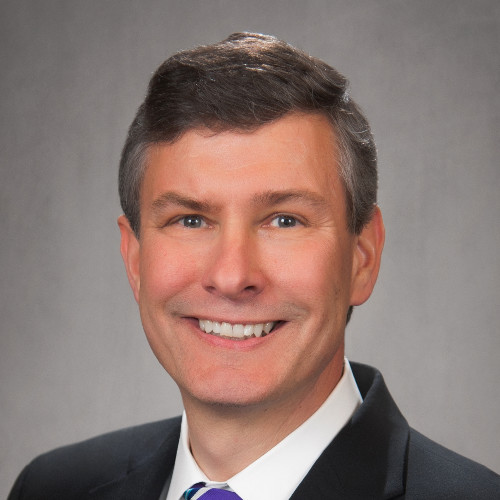
"I think we still see a large amount of discussion around data. Data are king and the organization of ourselves, and our data, I think, are key to what we want to accomplish, which is better, safer, more specific healthcare that can reach each of us as individuals and populations to make things better at a lower price." - Scott MacLean
SFTS_Scott Mac Lean.mp3: this mp3 audio file was automatically transcribed by Sonix with the best speech-to-text algorithms. This transcript may contain errors.
Intro/Outro:
Welcome to Smart From the Start, presented by care.ai, the smart care facility, platform company, and leader in AI and ambient intelligence for healthcare. Join Steve Lieber, former CEO of HIMSS, as he interviews the brightest minds in the health provider space on truly transformative technologies that are modernizing healthcare.
Steve Lieber:
I'm your host, Steve Lieber, and it's my pleasure to bring to you a series of conversations with some of the sharpest minds in health information technology. On these broadcasts, we discuss the smart directions healthcare companies and providers are pursuing to create smart care facilities and teams. Today, we are fortunate to have with us Scott McLean. Scott is Senior Vice President and Chief Information Officer at MedStar Health, responsible for the leadership and vision of information services and clinical engineering. His role includes oversight of informatics applications, implementation and support, integration, infrastructure, security, and telecommunications while ensuring development of collaborative technology solutions. With Digital Transformation, MedStar Institute for Innovation and Performance Improvement and Analytics teams. Previously, Scott was Deputy Chief Information Officer and Vice President of IS Operations for Mass General Brigham in Boston, and he has also served as Chief Information Officer at Newton-Wellesley Hospital and Director of Clinical Systems at Dana-Farber Cancer Institute. Scott and I have shared paths to go way back. We worked together at HIMSS, where he was on the board and board chair, as well as some time that I've spent recently at CHIME, where he currently serves as board chair for that association. Scott, it's good to see you again.
Scott McLean:
Thanks, Steve. I'm happy to be with you.
Steve Lieber:
Yeah, excellent! One of the things that I wanted to spend a little time talking with you about is you do get out and about. I run into you regularly at events and such, and you talk with a lot of folks in the industry. And so, I'm curious as to what are people talking about, what are the things that are top of mind among CIOs today?
Scott McLean:
Well, I think we both know that in the last year, the advent of generative AI has been all abuzz. And I think particularly in the last six months of the conferences we've been at recently, Steve, that this has come into focus, not just about something that's a new technology that's all hyped, but also some real-world applications about it. So I think people notice in your everyday lives that your iPhone and Microsoft 365, these products have a bit of artificial intelligence in them, suggesting words and texts and emails and that sort of thing. I think where we're seeing more direct application in the healthcare space is I saw some really good presentations on generative AI being used for response to the EHR inbox and the patient portal, um, not to be let go with uh, only machine interaction, but only vetted responses then could be used to distribute and ease the burden on providers and other clinicians that are interacting. So we see that, I think we still see a large amount of discussion around data. Data are king and the organization of ourselves, and our data, I think, are key to what we want to accomplish, which is better, safer, more specific healthcare that can reach each of us as individuals and populations to make things better at a lower price. So we hear a lot of conversations around that. And then I think we all know that we are challenged economically in the healthcare provider space. We're challenged with having enough of the right professionals to meet the demands of the population as it ages. And so, I think you hear a lot about virtual technologies that will help assist the caregivers that we do have by having bunkers of experts who can add to the expertise of people in the clinics and on the floors that are taking care of our patients at this point. Lots of exciting things going on, I think the backdrop of all of that, and maybe we'll get to this is it's just economically very challenging amidst all to see here that.
Steve Lieber:
Well, we definitely want to get to that. But I want to start out and with the way you led was, uh, generative AI and just artificial intelligence, sort of the advancement of technology I often talk about. And you and I were there at this stage, some 15 or so years ago. We spent a lot of time digitizing data. It was for those listeners that go back, getting it out of paper and into the machine, so to speak. And now, and your second point about Data King, we're now trying to figure out ways to use it. We've got it digitized and talked about. We've seen the adoption of analytics tools. Clinical decision support was always about that data going in and doing something with it, creating algorithms and that sort of thing. So, what are a couple of examples that are real life at MedStar that you can share with the listeners here about how this stuff is starting to play now? Where are you right now in that journey?
Scott McLean:
Sure. Well, I think and I just want to note, as you said, that we spend a lot of time digitizing and I think we have to, as we look forward, also have to look back at what's been accomplished since the high-tech act in the US and really around the world of people valuing getting healthcare data digitized and able to to use it. We still obviously have a lot of bulk data that's not discrete. And there are better tools nowadays for reviewing that natural language processing and whatnot. I think specifically here at MedStar Health, we're focused on a couple of things. One is we want to embrace these new technologies, and with that, I'm referring to artificial intelligence in all its forms. And we know that there are some there's plenty of upside to that, and so we want to embrace it. But there's also some challenges that we hear about bias and the machines making up information and not being able to rely on it. So we're being careful about that. We're looking at policy and possibly some technical controls around it, but I think our environment is aware of the upside opportunity. So, we have various groups within our MedStar Health Research Institute and within our MedStar Institute for Innovation, that are looking at various pilots and how we can utilize these technologies.
Scott McLean:
I think what's hitting the ground right away is less in artificial intelligence, although that's in the background, is we've had some pretty effective use of telesitting to support our caregiving environments where we can use virtual sitters and we're working hard on piloting virtual nursing. Again, this would be to supplement the expertise of the people at the bedside with experienced folks who can deliver that. So we're using a series of technologies to interact with the patient in the room. And this is not just for the nursing care, but also looks to deal with patient education, with food service, schedule of the daycare team, all those kinds of things. And then I think you probably hear people talking about ambient speech recognition. We see we've got several pilots of ambient speech going on, and we see a lot of satisfaction with clinicians and patients around that. And I think that's those packaged tools that we get delivered from our vendors that have artificial intelligence behind them, is really where we're seeing the application today.
Steve Lieber:
Yeah. Well, let's pick up on several of those areas. You mentioned virtual tech, telesetting, virtual nursing. How are you making the choices here, not only in terms of where those are broad topics, but who, and I'm not looking for names in terms of what company or anything like that. But the process that you go through to decide what, where, when, who.
Scott McLean:
A critically important, especially given the limitations, the limitations on economics, but also in the time frames, we have to have successes in these areas and in terms of where in the organization, which clinical areas, that really depends on where the greatest need is in terms of where we might have difficulty recruiting nurses, or the challenge with finding the right people for doing sitting, but also the readiness of that clinical unit. Is it prepared to adopt technology to do the change, people change management, people and process change management, that's necessary? In terms of suppliers, we often look first to the suppliers that we're in biggest relationships with. I think that makes sense. Like most people, we have a request for proposal processes where we do scanning of the environment. We always have people looking at what the latest technologies are and who the suppliers are, and then we select down to a number that we think are most viable that can go through a proposal process. And with that, then like with ambient speech, for example, we're looking at several suppliers, a couple of which have been working with for many years with other products, and that helps us gain trust with them. And they've shown they've demonstrated commitment to working in our clinical environments and getting to know the specifics about our clinicians and how they like to go about things.
Steve Lieber:
So, as I've talked to folks about this, many have talked about different applications in terms of the different pieces of virtual care and technology. And what I also hear people talk about is a little bit of a concern about point solutions and then having to bring all that together. Have you got a thought in that in terms of are you headed towards platforms over point solutions to point solutions have to be installed first, and then you figure out the platforms, help us understand a little bit of that evolution that I think probably occurs through the process of adoption and use.
Scott McLean:
Sure. It's a great question. And as you well know, Steve, this this is ebbed and flowed over our years in healthcare technology. And I think where we stand now is the preferences for platform. I think your EHR and revenue cycle platform, I think we should be guarded to to quickly step away from those. I think that those companies that are delivering these solutions they can't do everything at once, right? But they're looking to provide integrated solutions that make it easy for our clinicians and administrators to adopt it. So, I think we're not quick to deviate from our EHR and frankly, ERP platforms that we've invested significantly in. And then there are just in this space there, just the EHR companies aren't necessarily there yet with that, with their solutions. And so whether it's their partnerships or ones that we find that we bring to them, I think we're able to find some point solutions that who knows how that will evolve in terms of integration, partnerships or acquisitions, that that may serve us well. But I think we do like to be very careful about these things, we want to make smart investments, we have an excellent data integration and extraction team that helps us with integration of various products. And like I say, I think it's a little bit of both with an eye towards moving to the platform in the future. And I think just even in the last five years, we see platform use in various areas; our ticketing system, just that we are bread and butter in IS we use for incident and for request management as a platform that has use in other areas. We are we've outsourced our infrastructure, I think people know. And so they have various technology platforms that help us be able to deploy technologies more rapidly and monitor them and take care of them.
Steve Lieber:
Great. You've touched on workforce a couple of times. One, in terms of that part of the economic pressures that that you're faced with. And we'll get to that part in a minute. But I want to touch on another piece you talked about in terms of where who's ready to adopt technology, what sort of strategies do you employ to get that input and to understand where the various clinical departments are, who's ready, how they're going to react to it in that sort of thing. What are your processes for making sure that you're getting that connection to the end user?
Scott McLean:
Sure. I think a lot of it comes down to relationships, and fortunately, we have a number of people. We have a large applications analyst team that works with our EHR and other clinical systems that have been at this for many years, adopting the EHR. And so those relationships with our clinical users are deep-seated. And I think it also helps that the organizations, and most organizations have done this now, have adopted a universal EHR revenue cycle system. So you get a lot of data from the EHR vendor, and how users are interacting with it, who might be doing well or struggling could use some coaching with it. So those that gives us data points about who to approach. And then it's our operational partners. You think about operational management, nursing leadership, physician leadership that have eyes on a particular discipline or clinic or hospital floor that may be doing well with a certain operation or may be struggling and could use help with a technology pilot. So those are some of the ways that we go about it. I think a lot of it has to do with relationship knowledge over the years on how various hospital or floor or clinic has adopted something. People who are technology champions that are in those areas who are willing to embrace and work with us as we go through the process right of planning, designing, building, and testing it, training people, and hopefully having a successful outcome.
Steve Lieber:
You mentioned clinical leaders, and that sends me now into a little bit of a different tangent on this question about input at a strategy level, is there a conversation that involves a group of people to start you off in a direction? Help us understand a little bit about before you ever get down to which clinical department, what's the process? What's the discussion? Who are the players, where the roadmap, if it's that formalized, gets established in terms of adopting new technologies like this?
Scott McLean:
That's a great question, Steve. And one of the reasons I think you and I have talked about this, one of the reasons I was very interested in coming to MedStar Health is governance. I think the organization's really well governed and organized well from a board and board committee standpoint. And then our MedStar Health executive team, led by our CEO, talks a lot about strategy, leadership and execution. And so that conversation in the president's the CEO's cabinet is really where that strategy comes to formation. And we get a lot of good direction from that group. So part of that group is our CMO, our CNO, our president of the MedStar Medical Group, our operational leaders for the hospitals and clinical and business areas. And generally, an idea around a clinical technology would come through our CMO, CNO, COO, who are all clinicians, our president of the MedStar Medical Group, if it's a financial issue, something that revenue cycle or something operational that has to do with administration, that will often come from our COO again or our CFO. And I think that those leaders give us significant focus and direction based on board governance. And then we have a leadership team of which I'm part of that helps, bring that strategy into execution. And that's how we are able to figure out where to go, as you say, who to work with, what technologies might be best, and really bring about a solution. So we're big. We're a $8 billion, 30,000 person organization, ten hospitals. So there is a lot going on at any given time. But it's very impressive how we can get significant direction and be able to.
Steve Lieber:
I really appreciate you bringing that governance into this, because it is, especially when you just missed the steps there on how big of an operation this is. You've got to bring some governance structure and order to things so that you're not all flying off in, in multiple different directions. Back to staffing, you and I've talked about this, the challenges in terms of staff burnout, satisfaction shortages. You talked earlier about using virtual nursing - virtual technology to help solve that. So over the past at least year or two, we've been talking about this. Are we getting into a better situation? Is it getting worse? And your challenges are even more difficult to solve for now than they were before. Where are we in this cycle around the challenges we all have with staffing?
Scott McLean:
Sure. I mean, on the one hand, it's a real issue. These are real things with, um, just regular employment. And then we know about the issues of shortages for various physician and nursing disciplines. And I think those are real put up against the aging population that happily, is living longer, we got to take care of people longer. So I'm generally an optimist, and I'm sure this varies by region of the country and world. I think, generally, people work in not-for-profit healthcare because they're motivated by the mission, and we have the privilege of being the largest healthcare provider in the nation's capital area. And I think people enjoy that mission, being part of an organization that is able to take care of people from screening through ambulatory to inpatient care and rehabilitation. So I think we enjoy people's good favor, by sticking to that mission and being able to have the resources because we, I think, navigated well through Covid. So we can do this. I just think it's getting a little bit better in terms of, obviously the post-Covid period, that was very challenging. I feel like the latter part of last year, this new year, people are writing a ship a little bit, just anecdotally, in their personal lives and energy for what we're doing. I think, again, we've got opportunity, right, because against the realities of the demographics, we are going to have to transform how we deliver care. And we have smart people who are working on that, not just us, but across the country and world. This is happening, and I do believe we'll come up with solutions. We have a history, a track record of being able to solve big problems, and I think we'll be able to do that. It's going to take time and money. And just like any big problem that the government or corporation is trying to solve, we have to remain disciplined at it and impatient about how long it's going to take. And we have obviously short, medium, and long term objectives to be able to meet them.
Steve Lieber:
One more problem I'll throw at you before we wrap up here. And that's financial constraints. Again, we've all talked about this, and I think going back to 25 years that I've been hanging around your crowd, we've been talking about financial constraints and cuts to budgets and that sort of thing the entire time. I'm going to test your optimism here in terms of what your outlook. How do you feel about the future in terms of industry wide? I won't pin you down at MedStar Health specifically, but generally speaking, what's the outlook here?
Scott McLean:
Well, again, I'm an optimist, I think because it's a big problem and I don't think there's an easy solution. I'm not sure single payer payment system is the answer or going further with what we have. I think one thing about it is that there's a lot of money in the system, right? And there is a lot of investment in healthcare, from the country's standpoint, it's one of the adages I've heard is that the wealthier we are, the more of any good we want. That includes healthcare. So Americans spend a lot of money on healthcare. I think that there's certainly opportunity for efficiencies, not just administrative efficiencies, but clinical efficiencies. And I think we're just beginning to scratch the surface of the opportunity with population management, with using the data, we have to appropriately test, appropriately, intervene, use the appropriate therapies and more personalized therapies. The more information we have about specifics on people and what interventions work. So I will always be optimistic about the opportunity that we have there. And it's partly why I keep working in this industry. And I would just add, Steve, also, we've heard a lot about social determinants in the last several years. And I think there's we know that there's so much about health that happens outside the healthcare system. And I would just say a theme that I've been focused on is really about reconciliation. I do a lot of work in my community, in church and in Baltimore, and conversations come up all the time about resources and opportunities that people can have to be well and stay out of the clinic, stay out of the hospitals. And so I think one of the things every organization has their we call it equity and inclusion and diversity. Our initiatives around that, we're starting to get our associates more involved in communities, right? And they're interested in people's wellness outside the hospital. It's a collective effort. I think it has a lot to do with how people treat each other, not just here at work and clinically, but in our communities and how we can be better all together.
Steve Lieber:
Great. Thanks. To wrap up here, Scott, our listeners are folks that are physicians like you and related. And we like to close with an insight. Your takeaway, the thing that you'd like to leave behind with the audience, what Scott's leave behind for our audience.
Scott McLean:
Sure. I would just build more on what I said about I think we have to be patient, right. Some of this American healthcare system is huge, and transformation of how we deliver care and taking advantage of the data and the opportunities, thinking about social determinants, that's going to take time and money, and we have sometimes acute things like Covid we have to deal with right away and we adjust to that. But I think laboring at this long term is what we need. And again, I think thinking beyond the healthcare system to how we take care of people in the communities and environment before they even get there is what I leave behind.
Steve Lieber:
Excellent, Scott, really do appreciate your time today. It is always a treat to catch up with you. I think maybe I'll see you at the end of February at ViVe this year.
Scott McLean:
Absolutely looking forward to it. It'll be great.
Steve Lieber:
Excellent, great. Well, again, thank you and to our listeners. Thank you for joining us. I hope this series helps you make healthcare smarter and move at the speed of tech. Be well.
Intro/Outro:
Thanks for listening to Smart From the Start. For best practices in AI and ambient intelligence, and ways your organization can help lead the era of smart hospitals. Visit us at smarthospital.ai. And for information on the leading smart care facility platform, visit care.ai.
Sonix has many features that you'd love including advanced search, enterprise-grade admin tools, automated translation, powerful integrations and APIs, and easily transcribe your Zoom meetings. Try Sonix for free today.